Remembrance Sunday

It’s not every year that Remembrance Day falls on a Sunday, so 2018 is a special year.  The heads of state of Russia, the United States, Germany and France remembered the fallen of the Great War, which ended 100 years ago today, in a celebration in Paris.

Except that the war did not end 100 years ago today.  Russia, France the United States and Britain continued to fight long after 11 November 1918.

My grandfather, Jack Milne, fought in the Great War.  He joined up, aged 15, at the start of the war, along with millions of other Scotsmen, Englishmen and Germans.  They volunteered knowing that they might have to kill foreigners.  Unlike the French, they volunteered willingly, seduced by the marketing of the war, and the actions of their women, mothers, sisters and daughters, who sold themselves for a uniform or the king’s shilling.

Although my great-grandmother complained at the Army’s kidnapping of a boy, the Army kept him until they could legally send him to the front aged 17, just in time for third Ypres: Passchendaele.  In the Royal Signals attached to the 51st Highland Division, he somehow survived the German Offensive of 1918 which saw entire battalions of his Aberdonian friends wiped out.  He did suffer horses shot out from under him, saw his comrades blown up, and experienced life in the trenches for a year and a half, as well as the joy of victory at Cambrai and the Allied Offensive later that year.

When he was finally granted a medal for his participation, it stated simply “The Great War for Civilisation 1914-1919”.

1919, not 1918.  How quickly we forget.  There was no mistake on the medal, nor in the war.  .

The Great War did not end with the Armistice between England and Germany, between France and Germany in 1918.  Whatever minor disagreement had led to the carnage on the Western Front, the twenty million dead, the German, British and Russian heads of state were cousins; along with the republican French and American, their economic and social systems were closely aligned.  While the war threatened only the death of millions of civilians and cannon-fodder, the leaders were happy for it to continue, but not all civilians and cannon-fodder were happy with the war.

Throughout the Great War for Civilisation, organisations in Britain, Germany, Russia and elsewhere refused to accept the general conviction that the war was a good thing, that fighting each other was the best way to resolve political problems, or that “the other guys” were the baddies.  They attacked the media, the press barons, the politicians, and the industrialists, especially the merchants of death, the financiers, the steel barons, the nickel barons, the shipbuilders and the ammunition manufacturers, the gun salesmen and the generals.

Only in Russia did these complainers manage to achieve anything solid, with the democratisation of the Russian state and, eventually, the overthrow of the ruling class.  When a similar revolution after the Armistice caused the downfall of the German monarchy, it seemed as if the European civilisation itself was threatened.  In fact, only the aristocratic ruling class and its minions were threatened.  In Germany, the short-lived revolution brought about a middle-class government, heavily in debt to the Allied powers.  In Russia, the middle-class democracy disappeared under a wave of proletarian dictatorship.

The aristocracy and businessmen in western Europe and America saw communist Russia as more of a threat to their existence than the commercial challenge of imperial Germany.  They invaded Siberia, north-west Russia from the White Sea and the Baltic, and the Crimea.  For another year, the British remained in Russia.  Over five hundred British troops were killed, along with a couple of thousand Russians, by this pointless intervention.  Britain and America finally pulled out in 1919.

If our leaders can ignore history so blatantly, those who volunteered in 1914 and those who remember them but cannot be bothered to read their medals, should not.  The only reasons that twenty million men, women and children died in the Great War was that millions of young men volunteered to fight; millions of young women encouraged them to do so; millions of tax-payers funded their fighting; millions of workers built them guns and bullets; and thousands of politicians and military officers led them to the front.  The war achieved nothing, apart from these deaths, except the vast impoverishment of Europe, and of its bankers in the United States.

Instead of remembering the dead of the Great War, perhaps we could remember instead the thousands who are dying today, who we could save by simply refusing to fight, by refusing to fund the violence, by refusing to vote for our politicians, by refusing to support the armed action by countries that are our allies.  In the last twenty years, British soldiers, funded by British tax-payers, have helped to kill a million men, women and children in Islamic countries, all in actions that are illegal under the Atlantic Charter, the founding document of the United Nations.  These actions are also economically wasteful, ethnically divisive and politically charged, as they are primarily responsible for the current migration of Muslims into Europe.

A hundred years is long enough for most of the actors of the Great War to have died.  We can build our own memories, false though they may be, in a sort of Hollywood fantasy.  But it’s a shame we don’t remember the truth of those times, as we ignore the shame of today.

Image result for white poppy

Trump’s Tariff Threat

Tony Milne - Author's avatarTony Milne

Donald Trump’s tweet that he might leave the World Trade Organisation (WTO) is probably just a negotiating ploy, but his gut reaction is correct.

The WTO is merely a name change that more accurately reflects the organisation of international trade that was set up after the Second World War by the United States and Great Britain.  They called this the General Agreement on Tariffs and Trade (GATT).  GATT was set up to help reduce tariffs, or import duties, in a series of equal negotiations.

GATT was specifically designed to favour the great exporting and trading nations, and the merchants therein.  Reducing tariffs meant that imports of raw materials would be cheaper, which they could then process and export as finished goods.  They could also sell these at to GATT countries and make more profit.

Those who suffered most would be the nations that imported the most.  Consumers in those nations…

View original post 312 more words

Trump’s Tariff Threat

Donald Trump’s tweet that he might leave the World Trade Organisation (WTO) is probably just a negotiating ploy, but his gut reaction is correct.

The WTO is merely a name change that more accurately reflects the organisation of international trade that was set up after the Second World War by the United States and Great Britain.  They called this the General Agreement on Tariffs and Trade (GATT).  GATT was set up to help reduce tariffs, or import duties, in a series of equal negotiations.

GATT was specifically designed to favour the great exporting and trading nations, and the merchants therein.  Reducing tariffs meant that imports of raw materials would be cheaper, which they could then process and export as finished goods.  They could also sell these at to GATT countries and make more profit.

Those who suffered most would be the nations that imported the most.  Consumers in those nations might have found that the price of imported finished goods dropped but, as tax-payers, they would have to pay a higher price in sales or excise tax, or income taxes, to make up the lost government revenue.

At the time of GATT’s first round of negotiations, the only countries capable of mass production and shipping were the United States and Great Britain, so it was natural that they should enshrine their preferences in the agreement.  Britain had promoted the Freedom of the Seas since medieval times.  While England and then Britain were net exporters, and maintained a large fleet of merchant and warships, the strategy paid off.  The US was not a great exporter, relative to its production, but it was a great trading nation, importing raw materials.  It became a major exporter supplying European countries at war with each other.  In the period during and after the Second World War, it became the largest exporter in the world.  GATT was ideal to help it maximise its profit at this time.

Since 1975, the US has been a net importer.  It runs the world’s largest trade deficit.  It does not benefit at all from the low tariffs it imposed equitably when it had the power to do so.  Now, it merely invites low cost manufacturers to import their wares and receives little in return.

Protectionism, such as increased import tariffs, is not the solution to America’s economic problems; but it is a solution to their political problems.  Raising tariffs can only lead to a spiral of worsening trade figures, lower exports, and higher prices for imports.

To solve the country’s problems without creating worse ones would need more support than Trump is likely to win, even if he knew what to do.  In order to stay in power, leaving the WTO and raising tariffs may be the only thing he can do.

Donald Trump

No-deal Brexit or No-Brexit deal

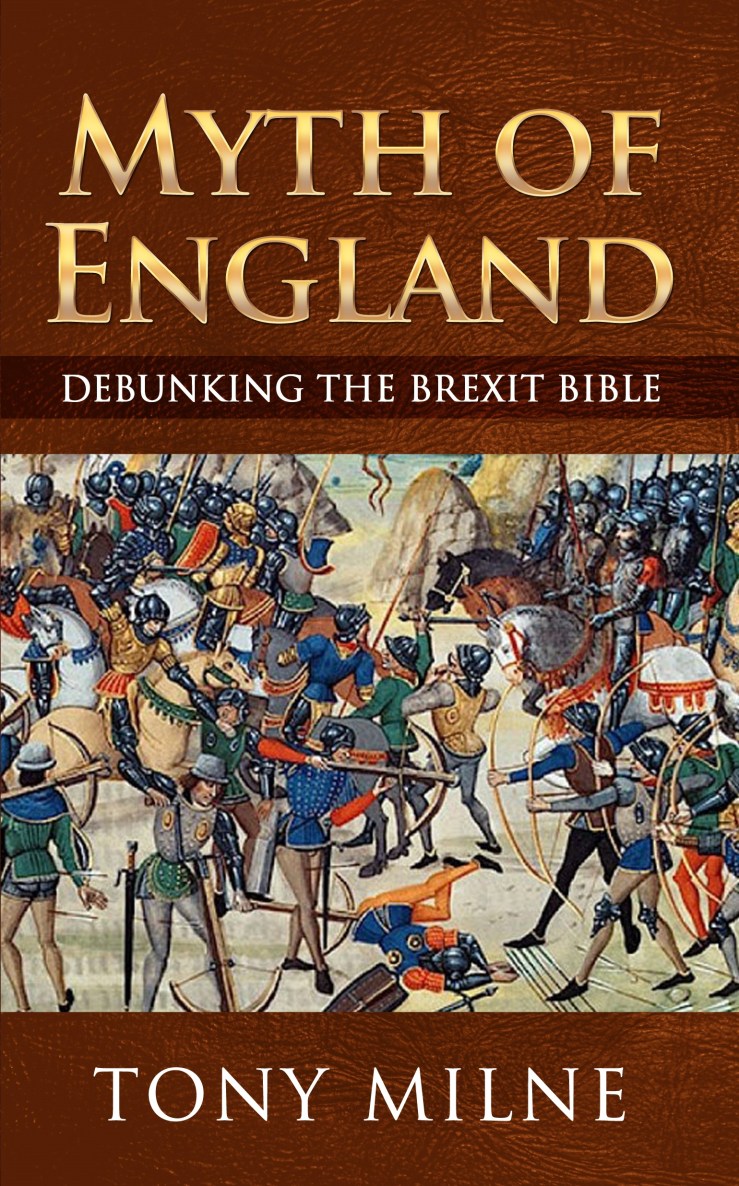
As England hurtles towards a no-deal Brexit or a no-Brexit deal, it is worth remembering some of the other times that our leaders and the people made similar decisions, and what happened.  Unfortunately, most history is propaganda, and schoolchildren are brought up to think of our ancestors as great heroes, and our past becomes a myth, the Myth of England.  This book sets out the real history of England’s rampant past.  Available from Amazon 

myth-of-england-front-cover-only

No-deal Brexit or no-Brexit deal

As England hurtles towards the Hobson’s choice of no-deal Brexit or a no-Brexit deal, it is worth remembering some of the other times that our leaders and the people made similar decisions, and what happened.  Unfortunately, most history is propaganda, and schoolchildren are brought up to think of our ancestors as great heroes, and our past becomes a myth, the Myth of England.  This book sets out the real history of England’s rampant past.  Available from Amazon on https://amzn.to/2MXbOAxmyth-of-england-front-cover-only

No-deal Brexit or No-Brexit deal ?

As England hurtles towards the Hobson’s choice of no-deal Brexit or a no-Brexit deal, it is worth remembering some of the other times that our leaders and the people made similar decisions, and what happened.  Unfortunately, most history is propaganda, and schoolchildren are brought up to think of our ancestors as great heroes, and our past becomes a myth, the Myth of England.  This book sets out the real history of England’s rampant past.  Available from Amazon on https://amzn.to/2MXbOAx

myth-of-england-front-cover-only

The Great British Bible

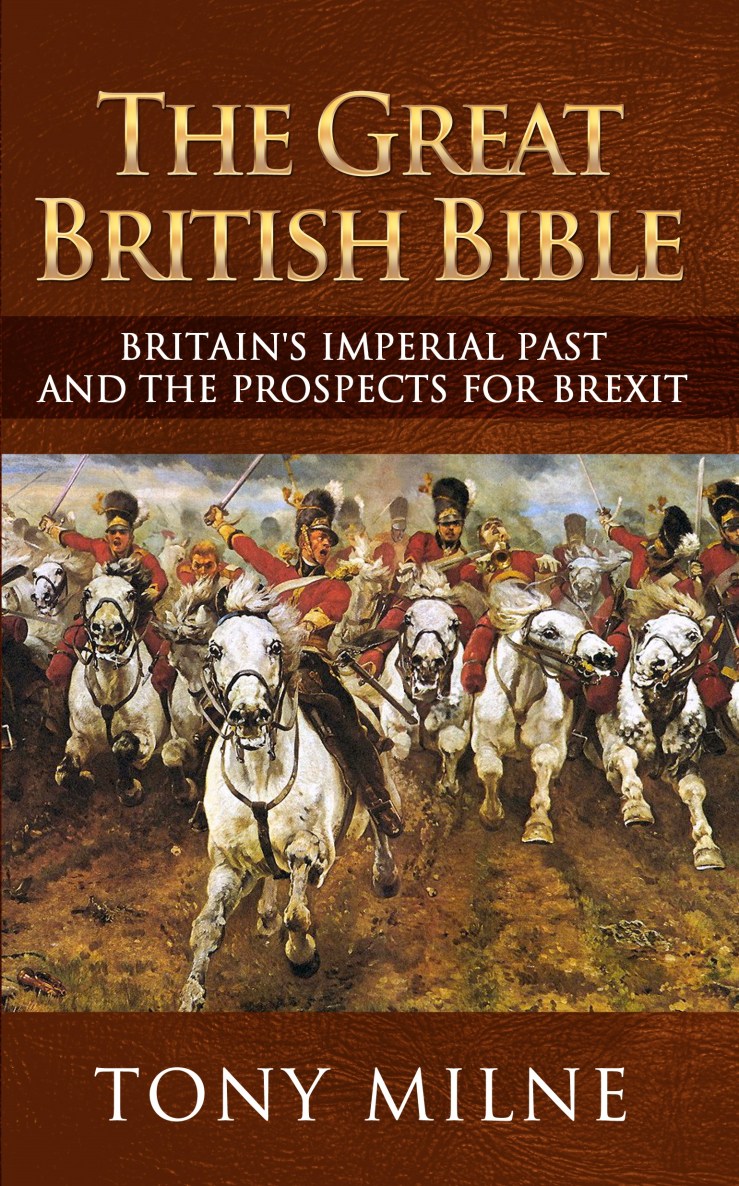
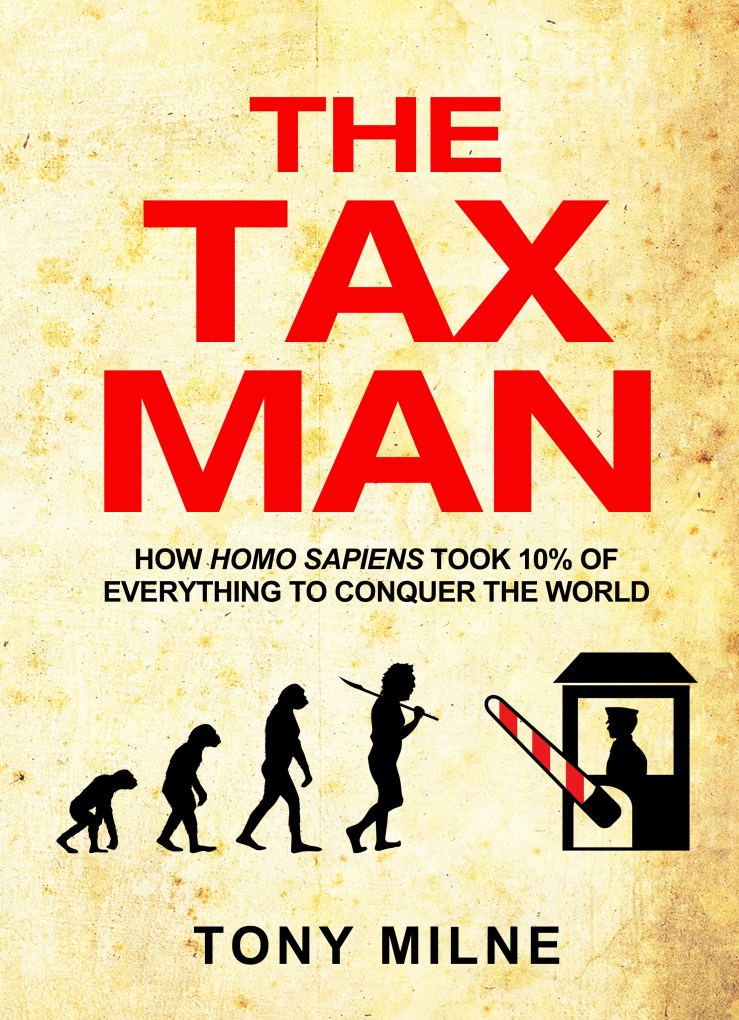
Just starting my next book – let’s see if I can get it into the bookshops for Christmas.  All I have to do is finish off The Tax Man first.  If you can’t wait till Xmas, there’s still time for you to read Myth of England, which sets the scene for this work.  As Painter said, in his review, “A must read history book”.  The_Great_British_Bible final front only.jpg

Myth of Brexit

During the Tory Party Conference in October last year, spoilt public schoolboy Jacob Rees-Mogg compared Brexit to the battle of Crécy, the battle of Agincourt, to the Magna Carta, “such a positive thing for our country” he said, but he was wrong; it may be a positive thing for a tiny minority, but all these battles he mentioned and even the Magna Carta were a disaster for England, especially for the young people who paid for them with their lives, their money or their freedom.

Myth of England was my best-selling book last year, but surprisingly it sold better in the USA than in the UK.  Perhaps the British don’t want their history spoiled.

So, I want to thank all my readers for buying my books, for reading them, and for giving me feedback, either on Amazon or directly.  Book sales increased more than 40% this year, so I am well on my way to sell a million books.myth-of-england-front-cover-only