Skip to content

Tony Milne

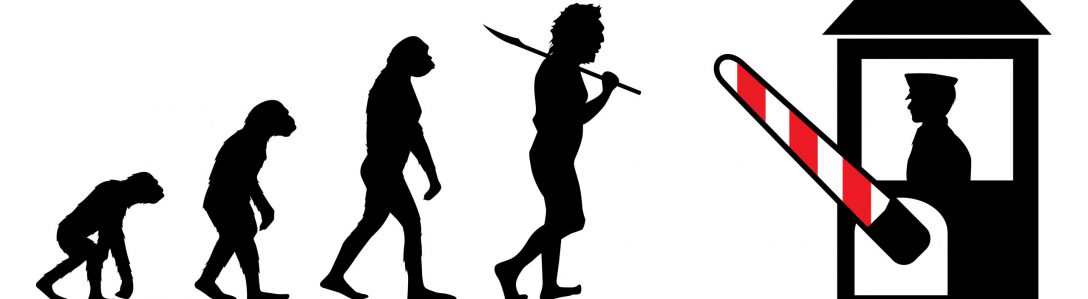
Inventor of the Tax Man theory of human development

  • The Tax Man
  • About
  • Downloads
  • Contact
  • Glossary

Contact

Please send any feedback to milnetony2(AT)hotmail.com or post a review on Amazon.  Many thanks. Tony

Share this:

  • Share on X (Opens in new window) X
  • Share on Facebook (Opens in new window) Facebook
Like Loading...
Social

  • View tony.milne.750’s profile on Facebook
  • View tony-milne-author’s profile on LinkedIn

The Tax Man

This book presents an overview of the human processes of taxation: how taxation works from the point of view of the tax-collector and the tax-payer; how it developed from the time before taxation existed; why it is successful in growing the economy, which in turn increases future taxation; how religion operates to improve taxation; what social controls are necessary to allow ever-larger groups of Man to congregate, co-operate and avoid bloodshed; and how tax has led to the greatest mammal population on the planet.
Taxation has more impact where the geography and geology help to reinforce its effects. Those societies that invested in improvements in communications, in agriculture and industry, achieved the greatest returns, while those who wasted their money on war, luxuries and buying votes declined. This book also covers the physical side of taxation, of the transport infrastructure, especially navigable waterways, and the products that were shipped on them, of the role of finance, and the organisation of the state, all of which can help understand historical civilisation, as well as help to predict the future.

Sample
Neanderthals did not pay tax.
Any Neanderthal male that approached another had better watch out, because there was only one thing that Neanderthal males did in those circumstances, and that was fight. Unlike domesticated animals, Neanderthal was an aggressive alpha male. There was no artistic temperament trying to get out, there was no compassion, care or kindness, there was no wasted gesture. As with all wild animals, the raw lust for life found its greatest expression in male-to-male combat for the right to dominate: to dominate a territory; to dominate other males; but most of all to dominate and fertilise females.
Current trends in palaeontology make out Neanderthal to be a cuddly, if hairy, granddaddy. This is specifically to target the tourist industry. In reality, he was a monster. He could never travel outside his own family area without ending up in a fight: with a lion, or with another Neanderthal. Neanderthals could not trade, travel or tax. They just fought, and killed or were themselves killed. Most Neanderthal skeletons found show the signs of violent death. These were not cuddly toy bears, but real bears that lived in the forests of Germany.
In 1856 the first Neanderthal bones were dug out of a cave in the Neander valley. Similar bones had already been found in Gibraltar and in Belgium. The bones were clearly of a species different to Man. Darwin’s Origin of Species was published three years later. It sparked off the first public arguments about Man’s possible descent from the owners of these bones, and about Man’s evolution in general, as well as about how prehistoric Man might have lived.
We now know that apes came down from the trees about seven million years ago. Possibly, this was due to climate change due to the creation of the Rift Valley in East Africa, and the concurrent development of mountains, which created a rain shadow, leaving the monkeys on a dry savannah.
The first vaguely human apes, Australopithecus, wandered around Africa four million years ago. The first humans, Homo habilis and Homo rudolfensis, used Stone Age tools about one million years ago. The powerfully built Homo erectus walked across Europe and Asia, using hand axes for tools; and he was followed by Neanderthal man, Homo neanderthalensis, who lived between 250,000 and 40,000 years ago, up to the last Ice Age, using the finest stone tools ever developed.
Throughout this evolution, body hair and fur was lost and replaced with sweat glands, allowing man to do more work without overheating, and he also developed stamina, to continue to work for up to 90 minutes or more without eating or resting. Whereas many animals never drink water, absorbing their bodies’ needs from the food they eat, the sweating of men or horses, or the panting of dogs, lost so much water that drinking water was necessary in addition to any food. To better absorb this water, glucose was necessary in the intestinal tract, and man developed a craving for sugar. And to provide the energy to run alongside their horses or dogs for 90 minutes, he had to eat a lot of calories. Neanderthal men had to work hard to eat enough calories.
The bipedal Homo also used his superior speed and weapon-carrying hands to kill any other apes who did not have bipedal locomotion, including all the Australopithecus and all the other Homo species. There are no surviving human species except the current; at each successive stage of human evolution, the advantages that have been gained are so superior, and the local aggression so intense, that the predecessor or competitor has been completely wiped out or assimilated. Home erectus wiped out his predecessors, and Homo neanderthalensis wiped out Homo erectus wherever he found them.
The new apes also used their bipedal locomotion to chase game. The new hunter was highly successful. But his wife’s upright posture meant that she had to cope with a constricted birth canal: babies born late could not get through; the ten-month gestation period of the early human being was forcibly reduced to nine months, and a premature baby became the norm, with intensive care necessary for the first few months. A mother forced to look after her baby needs another person to look after her. She needed her husband to come home every day with food, but while her husband was out hunting, the mother or, worse, the mother-in-law, would come round. With life expectancy no more than 30 years, child-rearing started at 15 years for Neanderthal girls. But it would take more than a few old women to raise these vulnerable children to maturity. Adult male apes are genetically predisposed to be nice to children, any children.
Stone Age men hunted in small bands, finding narrow gorges into which they could beat wild animals, where the small ones would be slaughtered by the children, and the larger ones would be hamstrung with axes and followed till they lay down exhausted, when they would be butchered on the spot by the adults. Neanderthal man used hand weapons and axes and spears, but would not have thrown the weapons, as he could get much more power to penetrate the heavy hide of his prey while holding onto the weapon. Neanderthal man had spent much time and effort to produce beautiful flint cutting edges, and he did not want to lose even one by throwing it. Mostly, adults would use a three metre long spear, which was powerful enough to kill a mammoth, but only at a distance as far as the spear was long.
As a hunter, Neanderthal man ate plenty of protein, meat, together with the attached animal fat. He ate little sugar, honey, sugar cane or fruits. Neanderthal men rarely had tooth decay for they had no good source of sugar. This lack of energy kept the population down, compared to what it could have been. Hunter-gatherers, if they ate well enough, would always produce more skins and furs than they could possibly use. Therefore, they always had something to trade. But as they were unable to stand direct human contact, they traded flints and furs across river boundaries, for wives, or perhaps for goats, which were cheaper, but easier to manage. There is no evidence that they ever traded across another group’s territory.
Even so, Neanderthal man spread worldwide and, along with the lion, became the super-predator of the open fields and light forests of the world. Already, there was a clash of large predators, with hyena, wolf and lion all competing for the same food. All of these animals were great, even ferocious hunters, with large appetites. But Neanderthal men put up with each other better than lions or wolves did and this gave them an advantage hunting the giant prey that then wondered the planet. Only the social hyena represented serious competition in terms of numbers, but the size of the hyena males is too small to trouble adult humans.
The last period of glaciation in the current Ice Age covered much of North America and Eurasia in ice, and killed off much of the game that man and the other predators would have eaten. This reduced the Neanderthal population, eventually reducing it to the point where it disappeared as a discernible entity in the paleological record. But it was not just the cold weather that was responsible for the disappearance of Neanderthal man.

Empire

Europe’s Rise and Fall as a World Power

For three thousand years of documented history, human civilisation developed on the major rivers of China, India, Mesopotamia and northern Africa. From these centres, there grew empires that eventually occupied most of the central latitudes of the Old World, except Europe. Only in the last two thousand years has Europe grown in importance; starting with the city-states that invented money to trade widely, and followed by the Roman Empire that came to dominate the Mediterranean. If Europe flourished, it was still dwarfed in terms of size and population by these other territories. However, in the year 1500, Portuguese ships returned from India for the first time, launching a period of 400 years during which Europe conquered those territories and, indeed, all of the rest of the world.
China, India and Africa, and the New World that was added to global knowledge, were all reduced to some form of servitude. In some parts of the world, European nations operated slave estates and feudal extractions that impoverished the native populations, while in others they used their economic leverage and military superiority to enforce unfair trade agreements; the result was economic disaster and massive famine for the conquered, and vast wealth for the conquerors.
Europe’s position as the dominant global power seemed unassailable yet, within 50 years, it had run up a massive trade deficit and murdered 80 million of its own population in two World Wars. Mired in moral and financial poverty, Europe was conquered and split in two, its colonies disposed of, its industries utterly destroyed.
This book describes how Europe developed, step-by-step, to create such a world power, and how it lost it. In order to start, every empire requires an improvement of the natural environment that requires wealth, the stockpile of human effort in some form or other, of live bodies, or of goods for exchange, or of cash. The great rivers of Asia and Africa provided this spare resource from the agriculture that was fertilised by annual floods. Europe’s failure to develop was the result of a lack of such rivers. It would have to find an alternative method to kick-start its empire-building.
Looking at individual empires within Europe, the book focuses on those European ideas that allowed such a small and lightly-populated peninsula to take control of countries and peoples many times larger. Through an analysis of a dozen European empires, it will be seen that demographic growth is the most important factor in creating great empires, and that empires require a victim, both at home and abroad. The process to create an empire is followed in this book: the initial concentration of wealth, usually through taxation; the use of this cash in speculative investments to improve production or reduce cost of whatever is made locally; the creation of a large market area, typically through customs unions, a reduction in local taxation; the integration of secular and religious taxation; the increase in economic liquidity through metal money, paper money, credit, and fractional reserve banking; the improvement in demography by the importation of large numbers of slaves; the growth of empires through methods more cost-effective than conquest, like marriage; the preservation of estate wealth across generational boundaries through appropriate inheritance mechanisms, limited companies and religious Orders; the discovery of products that could be sold in almost unlimited quantities like sugar and, later, tobacco, oil, power and data; and the vast added value that was created in manufactured goods. During this period, Europe led the world in all these developments with the effect that, by 1900, it dominated the rest of the world in terms of population growth, economic wealth and military power. The great empires of India and China were mere vassal states, with their native populations suffering the greatest famines in the history of the world.
None of these European ideas could be protected; each was as easy to copy by others as Asian and African products, gunpowder, silk, cotton, coffee, spices and china, had been by Europe. Europe was vulnerable to its own colonies, as well as to newer competitors. The old European empires failed to defend their lead and allowed these competitors to attack them, further weakening them.
Europe was replaced in 1945 as global hegemon by the United States. But in 50 years, the US has turned itself around. Today, it has the world’s largest-ever trade deficit, and is mired in morally-questionable wars. This book concludes with an assessment of America’s current predicament, and suggests the best ways to avoid Europe’s end.

The Crescent of Circumcision

If good taxation leads to the development of Empires, it is through demographic growth that this is achieved. Yet humans do not easily accept other humans, and the larger the empire, the larger the population, the larger the cities and the industries that make them.
This book looks at the social changes that are necessary to support large populations without them killing themselves. Circumcision is just one way that humans manage the very real antagonisms that exist in densely-packed population.

Blog at WordPress.com.
  • Subscribe Subscribed
    • Tony Milne
    • Already have a WordPress.com account? Log in now.
    • Tony Milne
    • Subscribe Subscribed
    • Sign up
    • Log in
    • Copy shortlink
    • Report this content
    • View post in Reader
    • Manage subscriptions
    • Collapse this bar
%d